
Build Your Skills
Q: What makes textual evidence effective?
A: Textual evidence consists of details from a reading that support an idea about it. You can quote the author’s exact words or paraphrase a detail in your own words. Choose evidence that directly supports your conclusion, and explain the connection. When a question asks for several pieces of evidence, use details that work together to strengthen your answer.
Example:
A character checks the clock repeatedly, leaves dinner untouched, and listens for footsteps outside. Together, these details suggest that the character is anxiously awaiting someone.
Q: How do I make an inference?
A: An inference is a conclusion supported by textual clues and logical reasoning. Authors do not state everything directly, so readers must sometimes connect details to understand a character’s feelings or motives.
Textual clues + logical reasoning → supported inference
For example, if a character rehearses a greeting several times before entering a room, you might infer that the meeting matters to the character and makes them nervous. Check later details to see whether they support or challenge your conclusion.
Q: What belongs in an objective summary?
A: An objective summary gives a concise account of a text’s central situation and important events. It identifies the main characters, explains the conflict, and describes the outcome. Present events in a clear, logical order. Leave out personal opinions, unnecessary quotations, and details that do not help explain the central action.
Read and Practice
Directions: Read the passage. Then answer Questions 1–4.
A Voice on the Recording
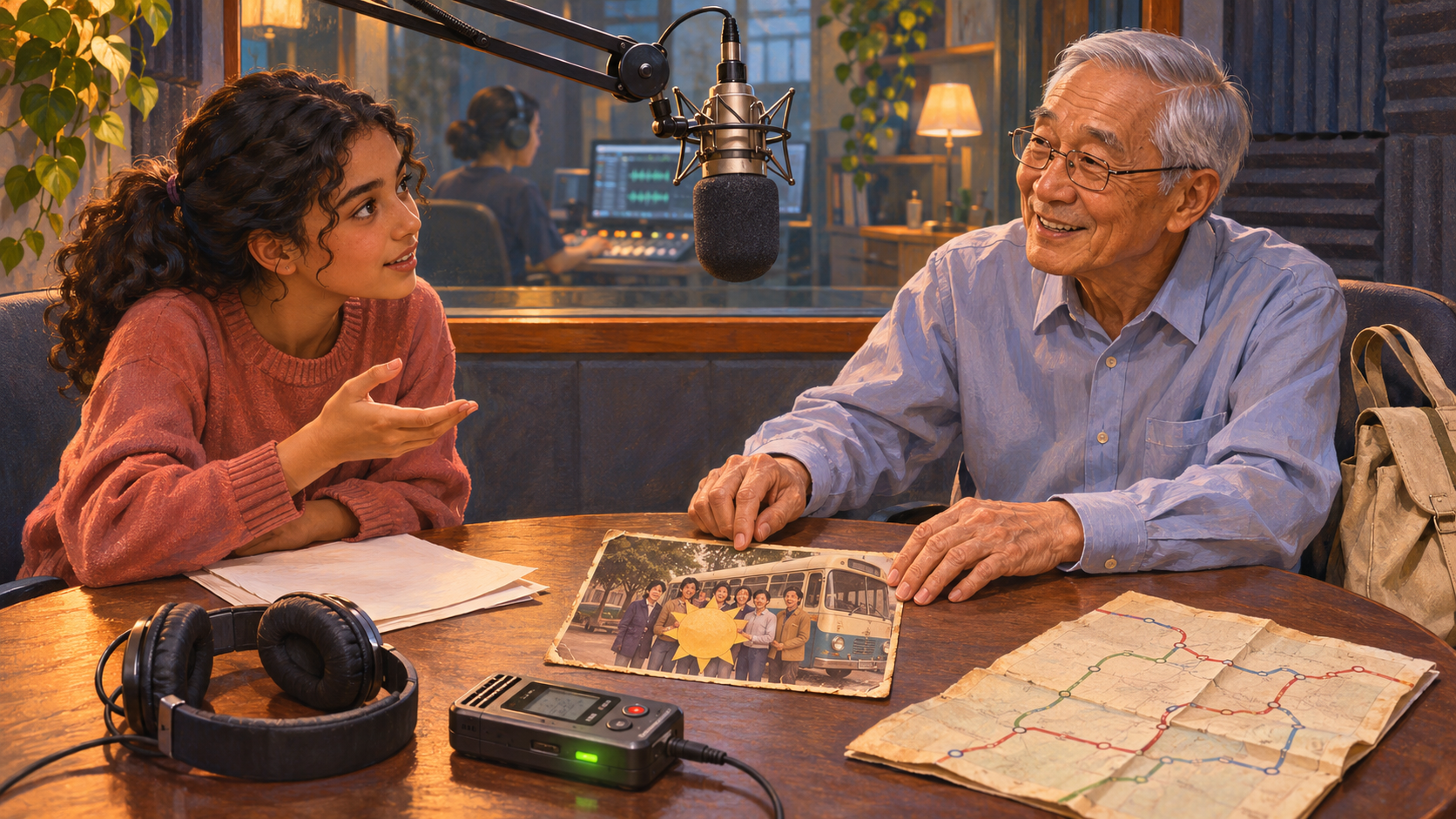
1. Leila paused outside the community radio station’s recording room. Through the glass, she could see a microphone suspended over a small table. She had volunteered to interview a resident for the town’s anniversary broadcast. On the bus, she had imagined herself asking thoughtful questions in a calm, professional voice. Now she could hear every breath she took.
2. Her interview partner, Mr. Chen, sat at the table with a canvas bag beside his chair. The retired bus driver wore a neatly pressed shirt. He watched the clock while Leila arranged her notes.
3. “We have twenty minutes,” he said.
4. Leila nodded. She had prepared twelve questions about changes in the town. She switched on the recorder and asked the first one.
5. “What year did you begin driving the Number Six bus?”
6. “Nineteen eighty-six.”
7. She waited, but he added nothing. Her next question received an equally short answer. Across the headphones came the steady hum of the room’s ventilation system. Leila glanced at her list. At this rate, the interview would end before she reached the bottom of the page.
8. Mr. Chen opened his bag and took out a faded route map. Leila assumed he needed help remembering the stops. Before she could ask, he laid a photograph beside it. The picture showed several passengers standing near a bus, holding an enormous paper sun.
9. Leila lowered her question sheet. “Why are they carrying that?”
10. Mr. Chen’s fingers rested on the photograph. “That was for Mrs. Ortiz. She rode with us every Thursday for treatment at the hospital. One winter morning, she said she was tired of leaving home in darkness.”
11. He explained that the passengers had made the paper sun and passed it from seat to seat, adding drawings and messages. By the time Mrs. Ortiz boarded the following Thursday, almost everyone on the route had contributed.
12. Leila forgot to check her next question. “Were these people already friends?”
13. “Most of them didn’t even know one another’s names.” Mr. Chen smiled. “They did afterward.”
14. When a cart rattled past the recording room, Leila stopped the recorder. “Could we record that last part again? I don’t want the noise to cover it.”
15. Mr. Chen straightened the photograph. This time, when he spoke, he described the smell of wet coats, the squeak of the bus doors, and Mrs. Ortiz laughing beneath the paper sun. Leila asked what happened to the passengers afterward. His answer led to another story, and then another.
16. A light flashed outside the room: five minutes remaining. Leila looked at the eight questions she had not asked, then turned the sheet face down.
17. “What would you want someone listening fifty years from now to understand about that bus?” she asked.
18. Mr. Chen considered the question. “That it carried more than people to their stops.”
19. Later, Leila listened to the opening of the interview. The ventilation system still hummed beneath her careful questions. She nearly deleted that section, then left a few seconds before the first story began. She could hear the difference between filling a silence and making room for someone to speak.
1. Which detail provides the weakest support for the conclusion that Leila becomes more responsive to Mr. Chen during the interview?
A. She asks about the paper sun instead of continuing through her prepared questions.
B. She asks a follow-up question about whether the passengers were friends.
C. She notices that Mr. Chen wears a neatly pressed shirt.
D. She turns her question sheet face down before asking her final question.
2. What can readers most reasonably infer about why Mr. Chen gives longer answers later in the interview?
A. Leila begins asking about an experience that matters personally to him.
B. He discovers that the recorder was not working earlier.
C. He decides that Leila needs to hear every event from his career.
D. Leila promises that his interview will be the longest in the broadcast.
3. Write an objective summary of the passage. Include the central situation, the important change in the interview, and the outcome. (3 points)
4. How does Leila’s response to sound change during the interview? Explain what that change reveals about her priorities. Support your answer with at least two details. (3 points)
Examine the Responses
Expand examples and answers
Question 1: Evaluating evidence
The correct answer is C. Mr. Chen’s clothing does not show a change in Leila’s approach. The other choices describe her moving away from a fixed list and responding to what he shares. A detail can be accurate without supporting the particular conclusion in the question.
Question 2: Drawing an inference
The correct answer is A. Mr. Chen brings a photograph, rests his fingers on it, and tells a detailed story when Leila asks about it. These clues suggest that the memory matters to him. The other choices introduce explanations the passage does not support.
Question 3: Writing a summary
Effective response:
Leila interviews retired bus driver Mr. Chen for a town anniversary broadcast. Her prepared questions produce brief answers, but a photograph leads her to ask about a meaningful experience shared by his passengers. By following his responses instead of her list, she records a fuller account and gains a new understanding of interviewing.
Response needing revision:
Leila sees a microphone and asks Mr. Chen some questions. He has a map and a photograph in his bag. I think the paper sun is the best part. The second response includes minor details and an opinion while leaving out the central change in Leila’s approach.
Question 4: Connecting evidence to analysis
Effective response:
At first, Leila notices her breathing and the ventilation hum because she is uncomfortable with the pauses between short answers. Later, she stops the recorder when a cart passes because she wants listeners to hear Mr. Chen’s story clearly. Her attention shifts from how she sounds to preserving what he has to say.
Response needing revision:
The room is noisy, but Leila gets used to it. This response does not explain the change in her priorities or support its conclusion with specific evidence.
Apply the Skills Independently
Directions: The next passage presents the interview from Mr. Chen’s perspective. Read it, then answer Questions 5–7.
What He Brought Along
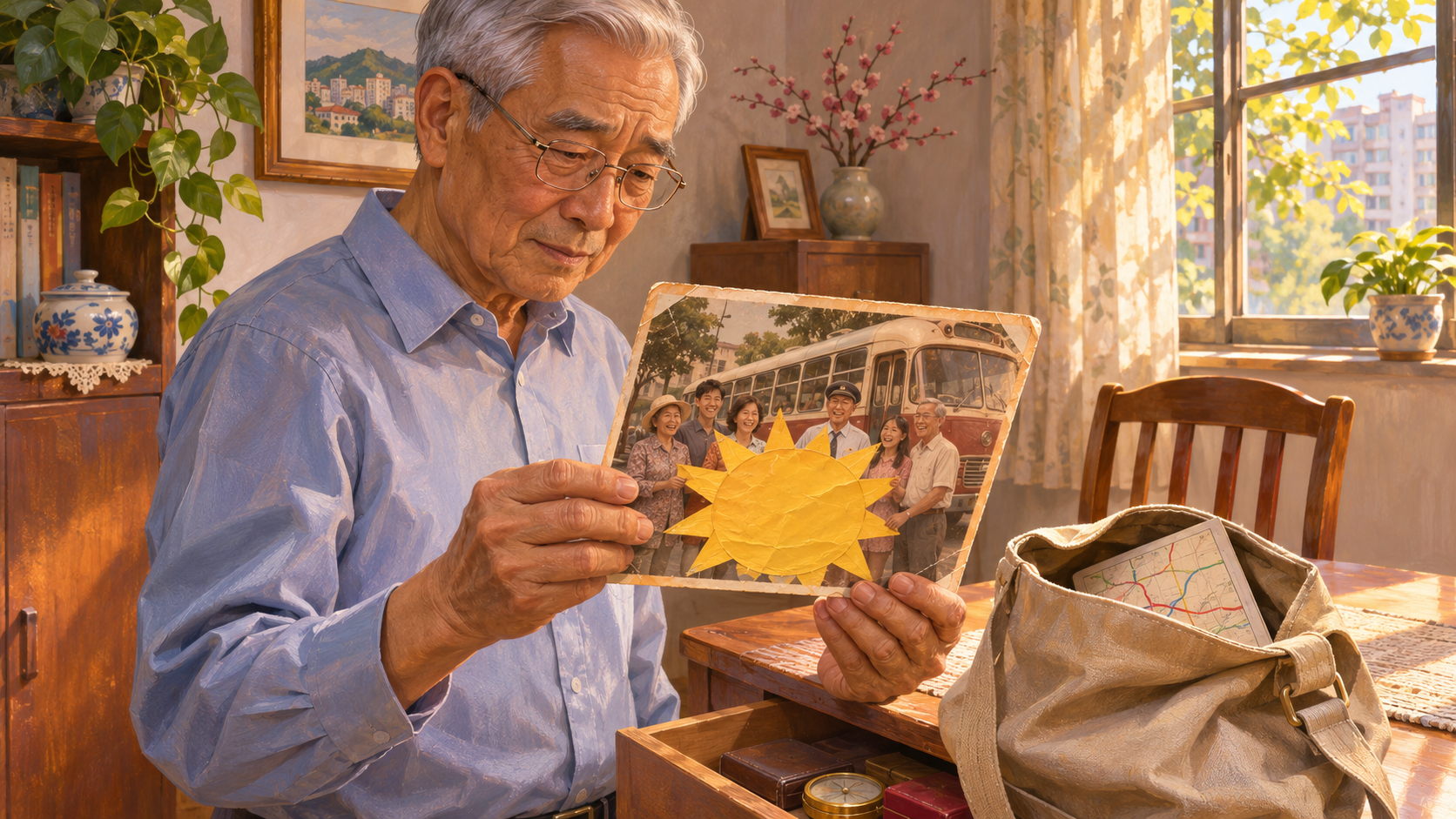
1. Before leaving his apartment, Mr. Chen placed his old route map in a canvas bag. Then he opened the drawer beneath it. Inside lay a photograph of the Number Six passengers holding a paper sun.
2. The station’s invitation had asked residents to share memories of the town. Mr. Chen had immediately thought of Mrs. Ortiz and the winter his passengers stopped being strangers. Still, he hesitated before adding the photograph to his bag. Perhaps the station wanted dates and street names, not a story about construction paper.
3. He arrived early. In the recording room, a young interviewer arranged several pages of questions. Mr. Chen glanced at the clock. He had twenty minutes. He did not want to waste her time.
4. Her first question asked when he had started driving. He gave the year. Another asked how many stops the route once had. He answered that too. Each time, he waited to be told what information she needed next.
5. He thought of mentioning Mrs. Ortiz, but the interviewer was already looking down at her notes. Instead, he took out the map. The photograph caught against its folded edge and slid onto the table.
6. “Why are they carrying that?” the girl asked.
7. For a moment, Mr. Chen saw the paper sun again, balanced across three passengers’ knees. He began explaining. When the interviewer asked whether the passengers had already been friends, he looked up. She was no longer reading from her pages.
8. He told her about the boy who had drawn crooked yellow rays and the woman who had missed her usual stop because she was helping tape the pieces together. These were not facts he had expected anyone to request.
9. A cart rattled outside. The interviewer stopped the recording and asked him to repeat the last part so the noise would not cover it. Mr. Chen smoothed the photograph. If she wanted to hear it twice, perhaps he had not brought the wrong memory.
10. Near the end, she asked what future listeners should understand about the bus. He looked at the faces in the photograph before answering.
11. Outside the station, Mr. Chen put the map away but kept the photograph in his hand. He had expected to provide information about a route. Instead, someone had asked him to remember the people who traveled it.
5. How does the photograph influence the events of the passage? Explain its effect on both the conversation and Mr. Chen’s confidence. Cite at least two details. (3 points)
6. Which inference about Mr. Chen is best supported by the passage?
A. He prefers discussing schedules to recalling people.
B. He is unsure whether his personal memories belong in the broadcast.
C. He resents being interviewed by a younger person.
D. He hopes the station will offer him a job.
7. Which detail is most important to include in an objective summary of “What He Brought Along”?
A. Mr. Chen stores the photograph in a drawer beneath his map.
B. Mr. Chen arrives at the station before his interview begins.
C. A question about the photograph encourages Mr. Chen to share a memory he had doubted was worth telling.
D. A passenger once missed her stop while helping tape paper together.
Test-Taking Strategies
1. Match the evidence to the claim. Ask how each detail supports the exact idea in the question. Watch for choices that are true but irrelevant.
2. Check an inference against several clues. A strong inference explains details already in the passage. Eliminate answers that require you to invent an event, motive, or conversation.
3. Summarize the central action. Identify the main situation, the important development, and the outcome. Keep details that explain those connections.
4. Explain the link between evidence and reasoning. After citing a detail, explain what it reveals. Quoting a sentence alone does not complete an analysis.
Remember: A supported response tells readers what you conclude, which details support it, and why those details matter.
Teacher Answer Key
Expand examples and answers
1. C
2. A
3. Sample response: Leila interviews Mr. Chen for a town anniversary broadcast, but her prepared questions produce short answers. After noticing a photograph, she asks about a passenger experience and begins following Mr. Chen’s responses. The interview becomes more detailed, and Leila recognizes the importance of listening rather than simply completing her list.
Scoring: 3 points
• 1 point: Identifies the characters and interview assignment.
• 1 point: Explains the shift from prepared questions to a meaningful personal account.
• 1 point: Includes the outcome in concise, objective language.
4. Sample response: At first, Leila notices her own breathing and the ventilation hum while worrying about the interview. Later, she stops a recording because a passing cart might obscure Mr. Chen’s words. This change shows that she becomes more concerned with capturing his experience than with appearing professional.
Scoring: 3 points
• 1 point: Explains the change in Leila’s priorities.
• 1 point: Provides a relevant detail from the beginning.
• 1 point: Provides and explains a relevant detail from later in the interview.
5. Sample response: The photograph prompts Leila to ask about the paper sun, shifting the conversation from dates and stops to the passengers’ experience. Her follow-up question shows Mr. Chen that she is interested. When she asks him to repeat a section so it can be heard clearly, he begins to believe his memory belongs in the broadcast.
Scoring: 3 points
• 1 point: Explains how the photograph changes the conversation.
• 1 point: Explains how the resulting interaction increases Mr. Chen’s confidence.
• 1 point: Supports the explanation with at least two accurate details.
6. B
7. C